
Organic vs Conventional Cotton Bags: 7 Key Differences
-

10th Jul, 2026
-

(0)

By : Sara International
Our customers ask us this question almost every week: Is organic cotton worth the higher price, or is conventional cotton the smarter buy for a bulk order?
After manufacturing both for more than 10 years, we can confidently say they’re genuinely different products, not just different marketing labels. Data published by Textile Exchange highlights measurable differences between organic and conventional cotton production.
This guide explains the 7 key differences between organic and conventional cotton bags, from farming practices and water use to certifications and cost. It’s written for brand owners, retailers, and promotional buyers who need to choose between organic and conventional cotton tote bags and make a decision they can justify to their customers.
Organic vs Conventional Cotton Bags: A Quick Glance
Organic and conventional cotton begin to differ at the farming stage. Organic cotton is grown without synthetic pesticides or fertilisers and generally requires less irrigation water per hectare. Conventional cotton produces higher fibre yields per hectare and costs less, which is why it continues to dominate the cotton bag market.
Neither option is inherently better. Organic cotton bags offer advantages in chemical use, worker safety, and soil health. Conventional cotton bags cost less and are easier to source in large quantities. However, the biggest factor in a bag’s environmental impact is not the type of cotton it uses. It is how many times the bag gets reused.
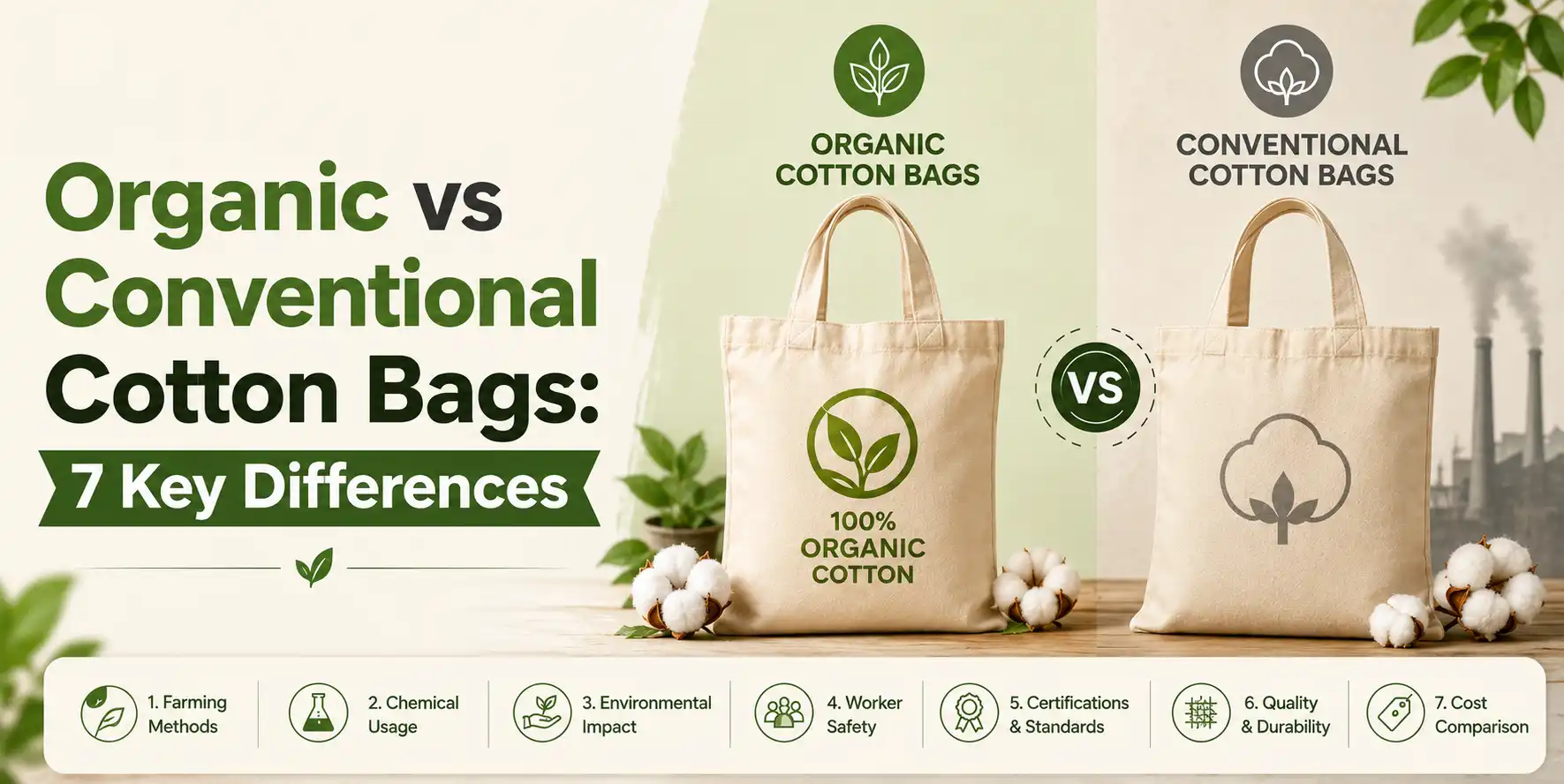
The comparison below explains the seven key differences between organic and conventional cotton bags.
| Factor | Organic Cotton Bags | Conventional Cotton Bags |
|---|---|---|
| Seeds | Non-GMO seeds | Often genetically modified (GM) seeds |
| Fertiliser | Compost and crop rotation | Synthetic chemical fertilisers |
| Pest Control | Natural methods and beneficial insects | Synthetic pesticides |
| Irrigation Water (per hectare) | Up to 91% less water | Higher water use |
| Fibre Yield (per hectare) | Approximately 14–28% lower | Higher fibre yield |
| Global Warming Impact (per tonne) | Approximately 46% lower | Higher carbon impact |
| Certification | GOTS, OCS, ACO and similar certifications | Usually no sustainability certification |
| Price per Bag | Higher | Lower |
| Best For | Premium, sustainable and eco-conscious brands | High-volume, budget-conscious orders |
What Are Organic and Conventional Cotton Bags?
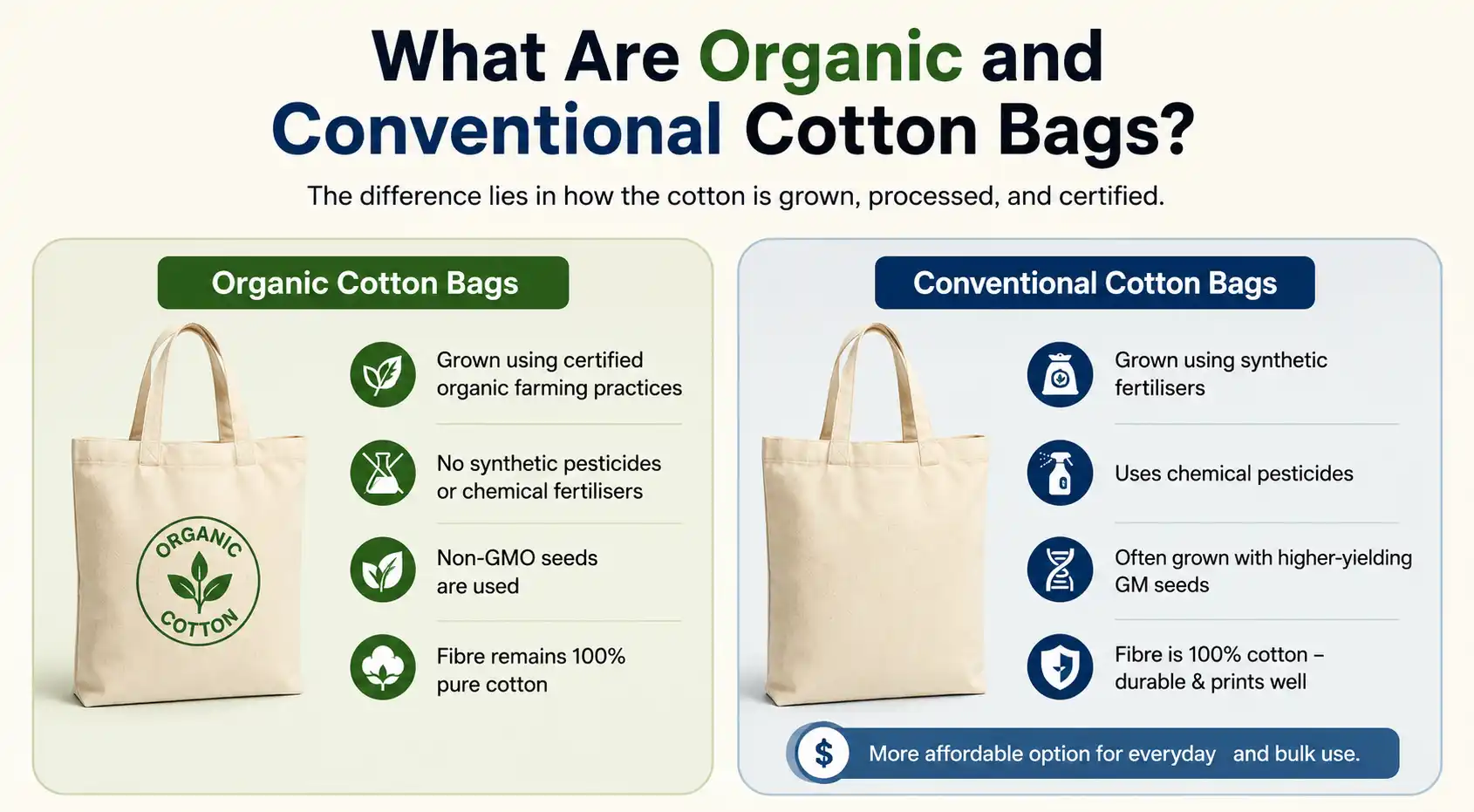
Not all cotton bags are made the same. The biggest difference lies in how the cotton is grown, processed, and certified, which affects their environmental impact, cost, and ideal use.
Organic Cotton Bags
Organic cotton bags are made from cotton grown using certified organic farming practices. Farmers avoid synthetic pesticides and chemical fertilisers, relying instead on crop rotation, compost, and natural pest control methods. Organic farming also requires the use of non-GMO seeds, so genetically modified varieties are not permitted. While the farming methods differ, the fibre remains 100% pure cotton.
Conventional Cotton Bags
Conventional cotton bags, often sold as “100% cotton,” are made from cotton grown using synthetic fertilisers, chemical pesticides, and, in many regions, higher-yielding genetically modified seeds. This does not make the material low quality. The fibre is still 100% cotton. It is durable, prints well, and is available at a much lower price than organic cotton.
7 Key Differences Between Organic and Conventional Cotton Bags
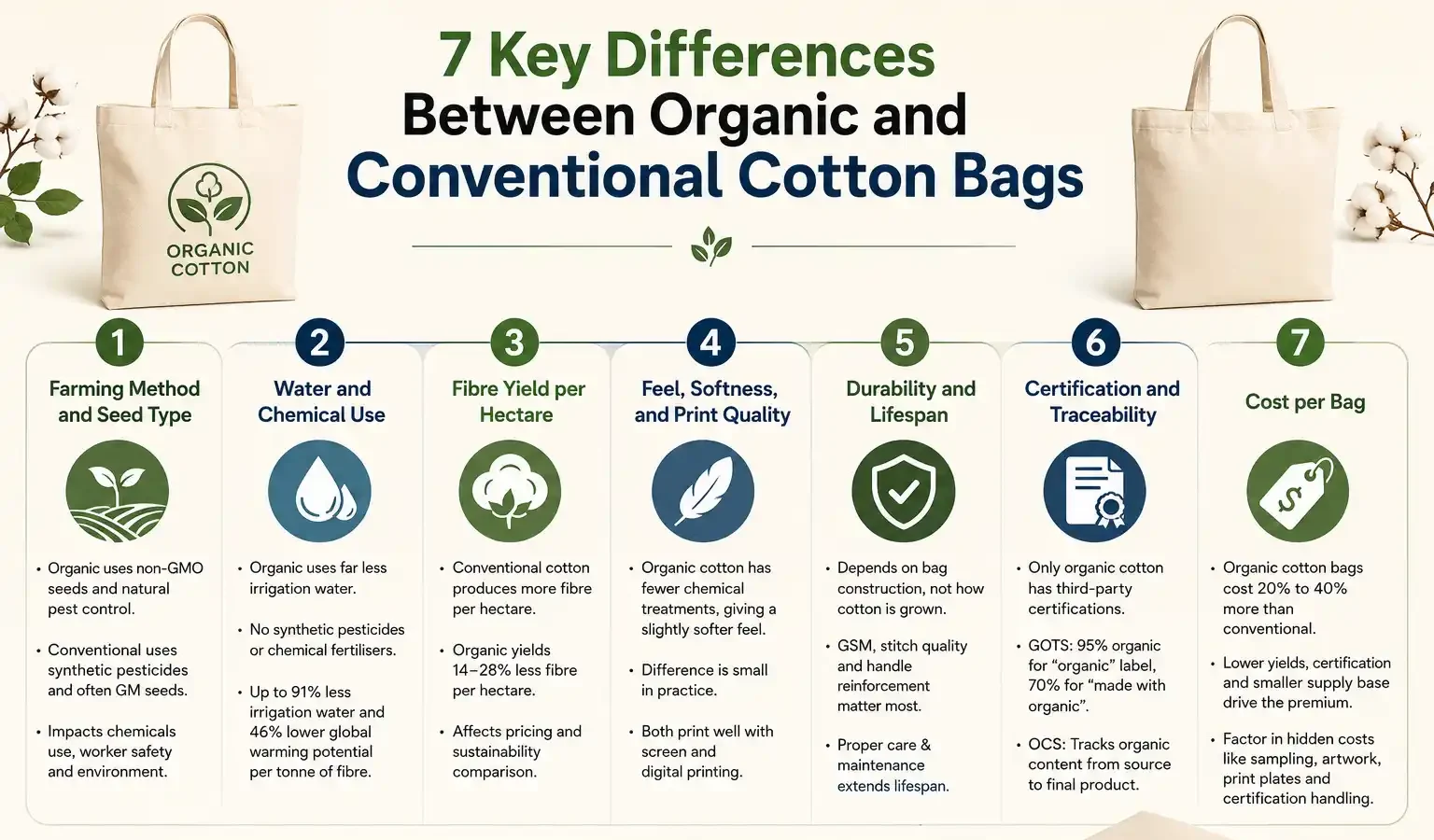
The comparison table provides a quick overview. The sections below explain what each difference means and why it matters when choosing between organic and conventional cotton bags.
1. Farming Method and Seed Type
This is the main difference between the two. Organic cotton uses non-GMO seeds and natural pest control methods, while conventional cotton relies on synthetic pesticides and, in many regions, genetically modified seeds. This difference affects chemical use, worker safety, and the surrounding environment.
2. Water and Chemical Use
Per hectare, organic cotton uses far less irrigation water and avoids synthetic pesticides and chemical fertilisers. The Textile Exchange Life Cycle Assessment found around 46% lower global warming potential and up to 91% less irrigation water per tonne of fibre, making organic cotton a lower-impact option from a farming perspective, findings that GOTS also highlights.
3. Fibre Yield per Hectare
Conventional cotton produces more fibre per hectare. Organic cotton yields 14–28% less fibre per hectare because it forgoes synthetic fertilisers and high-yield GM seeds. That gap affects pricing and the sustainability comparison we cover later.
4. Feel, Softness, and Print Quality
Organic cotton undergoes fewer chemical treatments, which helps preserve the natural fibres and gives the fabric a slightly softer feel. In practice, however, the difference is small. Both organic and conventional cotton deliver excellent results with screen printing and digital printing when manufacturers use good-quality fabric.
5. Durability and Lifespan
Durability depends on how the bag is made, not how the cotton is grown. Fabric weight (GSM), stitch quality, and handle reinforcement have a much bigger impact on lifespan than whether the cotton is organic or conventional.
We manufacture cotton tote bags in weights ranging from 5 oz to 12 oz, and have found that a well-made conventional cotton bag can easily outlast a poorly made organic one.
Care matters too. Washing, drying, and storing cotton bags properly helps them last longer. Our guide on removing musty smells from a cotton tote bag explains one of the most common maintenance issues buyers face.
6. Certification and Traceability
Only organic cotton carries recognised third-party certifications. The Global Organic Textile Standard (GOTS) requires at least 95% organic fibre for its “organic” label and at least 70% organic fibre for products labelled “made with organic.” The Organic Content Standard (OCS) verifies and tracks organic cotton content from the source through to the finished product.
7. Cost per Bag
Organic cotton carries a consistent price premium because farmers produce lower yields, suppliers meet certification requirements, and the supply base remains smaller. In our bulk quotations, certified organic cotton bags usually cost 20% to 40% more than conventional cotton bags with the same GSM. Order volume, print method, and freight costs also influence the final price of both.
Buyers should also account for hidden costs. Sampling, artwork setup, print plates, and certification handling all add to the total order cost. We explain these costs in more detail in our guide on minimum order quantity for custom printed eco bags.
What these Differences Mean for Sustainability
Per hectare of farmland, organic cotton performs better. The trade-off is fibre yield. Organic cotton produces less fibre per hectare, so meeting the same order volume may require more land and resources. As a result, its environmental advantage becomes smaller when you measure the impact per finished bag instead of per hectare.
Location also plays a role. Part of organic cotton’s water advantage comes from where it is grown, often in rain-fed regions rather than heavily irrigated conventional cotton-growing areas. Treat these headline figures as general indicators rather than exact values to avoid overstating any sustainability claim.
Reuse has the biggest impact. A Danish Environmental Protection Agency life cycle study found a cotton bag needs thousands of reuses to beat a thin plastic bag. If you are still weighing cotton against plastic, our post on why brands switch to cotton bags over plastic bags covers the wider case.
Avoiding Greenwashing When Sourcing Cotton Bags
The word “organic” on its own does not prove a product meets organic standards. Certification turns that claim into something buyers can verify. Some retailers market cotton tote bags as “recycled” or “sustainable,” but the fine print reveals that only part of the cotton actually meets those claims.
Your brand carries that risk, not just your supplier. If a customer or regulator questions an unverified “organic” claim, you are responsible for supporting it. Make sure your marketing matches your certification. If you label a bag as organic, source GOTS or OCS certified products and keep the transaction certificate on file.
Choosing Between Organic and Conventional Cotton Bags for Your Brand
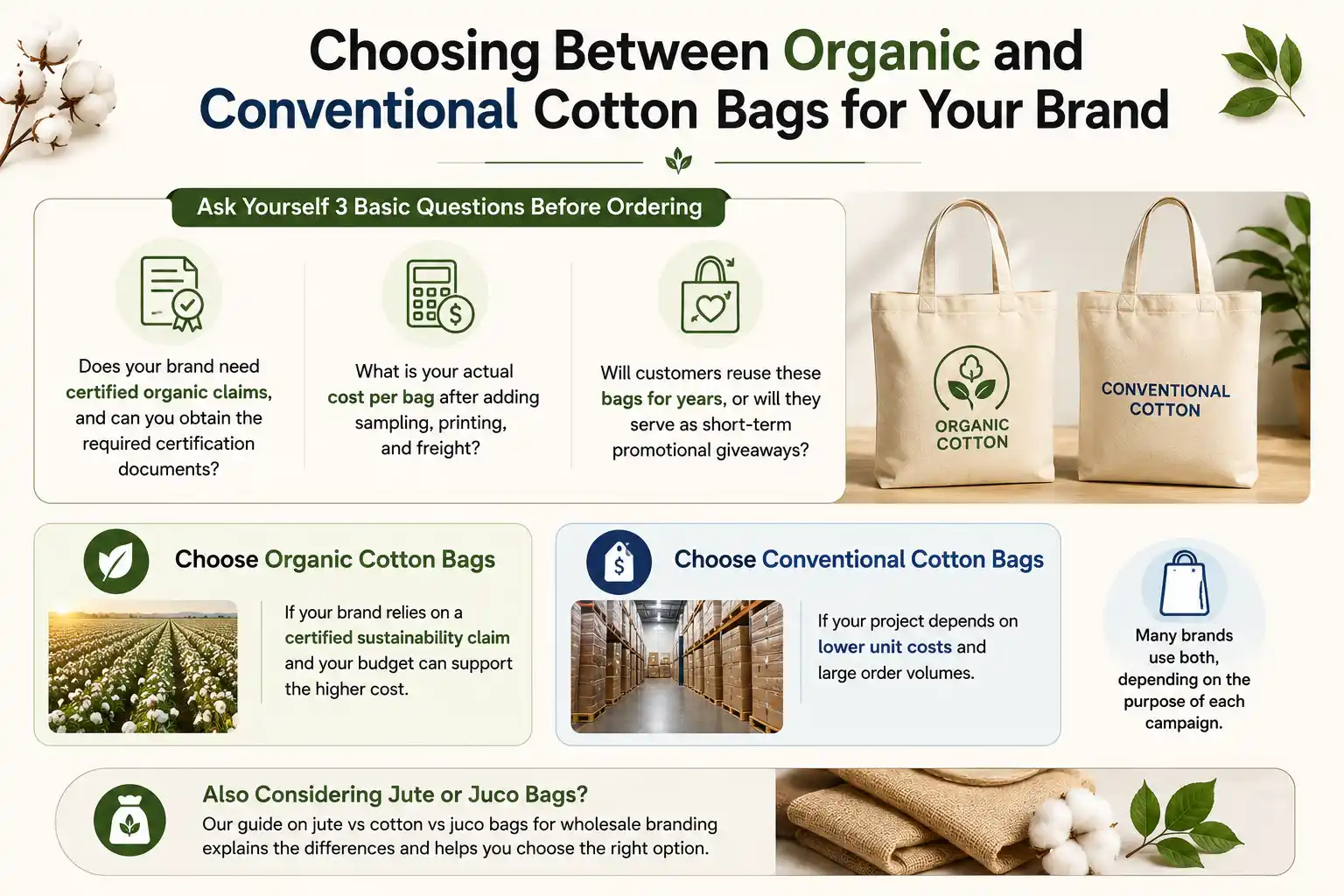
Ask yourself three basic questions before placing an order. Does your brand need certified organic claims, and can you obtain the required certification documents? What is your actual cost per bag after adding sampling, printing, and freight? Will customers reuse these bags for years, or will they serve as short-term promotional giveaways?
Choose organic cotton bags if your brand relies on a certified sustainability claim and your budget can support the higher cost. Choose conventional cotton bags if your project depends on lower unit costs and large order volumes. Many brands use both, depending on the purpose of each campaign.
If you are also considering jute or juco bags, our guide on jute vs cotton vs juco bags for wholesale branding explains the differences and helps you choose the right option.
Source Organic and Conventional Cotton Bags with Sara Exim
Both organic and conventional cotton bags have their own advantages. The right choice depends on your budget, branding goals, sustainability requirements, and the purpose of your order.
At SARA International, we manufacture and export both organic and conventional cotton bags, along with jute and juco options, with custom printing and private labelling for bulk orders.
If you’d like to compare materials before placing an order, reach out to us for samples or a quotation.
FAQs: Organic vs Conventional Cotton Bags
Categories
Latest Post
-

-
July 31, 2026
Jute Bags Manufacturer: The Complete B2B Sourcing Guide
-
July 24, 2026
Cotton Tote Bags Wholesale: The 2026 Bulk Buyer’s Guide


Are organic cotton bags the same as 100% cotton bags?
Are organic cotton bags better for the environment than conventional?
Do organic cotton bags last longer than conventional cotton bags?
Which certifications should I ask a cotton bag supplier for?
Are organic cotton bags worth the extra cost for a bulk order?
